

Can Pus Around My Tooth and Furcation Involvement Lead to Extraction?
Posted by AllSmiles
My dentist says that my lower left first molar has furcation involvement. The tooth has already had a root canal, and lately I’ve noticed puffy gums, occasional bleeding, and some pus around the area.
I’m concerned. Does furcation involvement combined with these symptoms indicate a serious problem? Can the tooth still be saved, or should I prepare for the possibility of losing it? – Thanks. Finnegan from NY
Finnegan,
Pus around a tooth raises more concern than furcation involvement. Pus indicates an active infection that needs prompt control. A furcation issue usually develops more slowly and does not automatically threaten the tooth.
What Is Furcation Involvement?
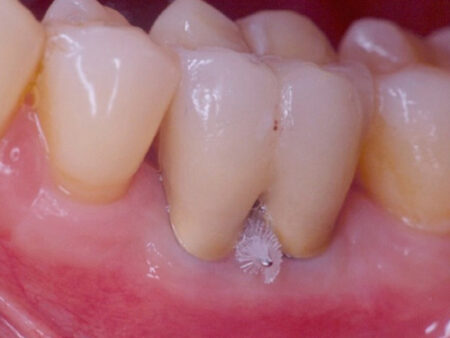
Furcation involvement occurs when gum recession or bone loss exposes the area where a molar’s roots separate. The exposure signals some loss of bone support, but it is often not critical. Many teeth with furcation involvement still retain 80–90% of their supporting bone, which is usually enough to keep the tooth stable.
Furcations make home care more demanding. Because the area is sheltered, plaque can accumulate unless you clean it daily. With the right tools and techniques, many patients manage this successfully.
- Use a small, specialized brush designed to access furcations
- Clean the area thoroughly every day
- Ask your dentist to provide the brush and show you proper technique
Bleeding Gums vs. Pus
Inflamed gums often appear puffy or bleed because plaque bacteria release toxins. This commonly reflects early gum disease and usually responds well to professional deep cleaning and consistent home care.
Pus signals a deeper infection within a periodontal pocket where bacteria. Home care cannot clean the area, and even professional cleaning may prove difficult. The ability to save the tooth depends on how much bone support remains. In some cases, surgery can open the area for daily cleaning; in others, the tooth may not be salvageable.
Root Canal Treatment and Tooth Longevity
A completed root canal does not compromise the long-term survival of a tooth. When infection reaches the pulp, the dentist removes the pulp and seals the space with a root canal filling. If a root canal fails, infection typically reappears at the root tip within the first few months. Once healing occurs, the tooth does not relapse.


 Find us on the map